
What Types of Concrete Can Be Lifted? A Homeowner’s Guide
Cracks are spreading across your driveway. Your patio dips low enough to collect rainwater after every storm. Your first thought is probably to call for a full concrete replacement quote.
We get it. Watching a slab you paid good money for start to sink or crack is frustrating. Especially when an expensive, full tear-out means days without your driveway, patio, or walkway.
Before you book a replacement, it’s worth asking: what types of concrete can be lifted instead? At Keystone Gun-Krete, concrete lifting has been part of our lineup since the early 2000s. In most cases, the slab you already have can be restored to its original position.
We’ve been solving concrete problems across South Central Pennsylvania since 1980. Let’s look at which surfaces qualify for lifting and what we check for. We will also address when replacement really is the better call.
TL;DR - What Types of Concrete Can Be Lifted? A Homeowner’s Guide
- What it is: Concrete lifting raises and re-levels sunken concrete slabs by injecting polyurethane foam underneath them.
- The main benefit: It avoids the need to completely tear out the old concrete and start over, saving both time and money.
- Where it works: It applies to most flatwork, including driveways, sidewalks, patios, pool decks, garage floors, and commercial walkways.
- Who it's for: Ideal candidates have structurally sound slabs; it is not suitable for concrete with severe cracking, crumbling, or unresolved soil issues.
- The payoff: The process takes hours instead of days and costs a fraction of a full replacement.
How Concrete Lifting Works (and Why Replacement Isn’t Always the Answer)
Most sunken concrete isn’t actually a concrete problem. It’s a soil problem.
Why Slabs Settle in the First Place
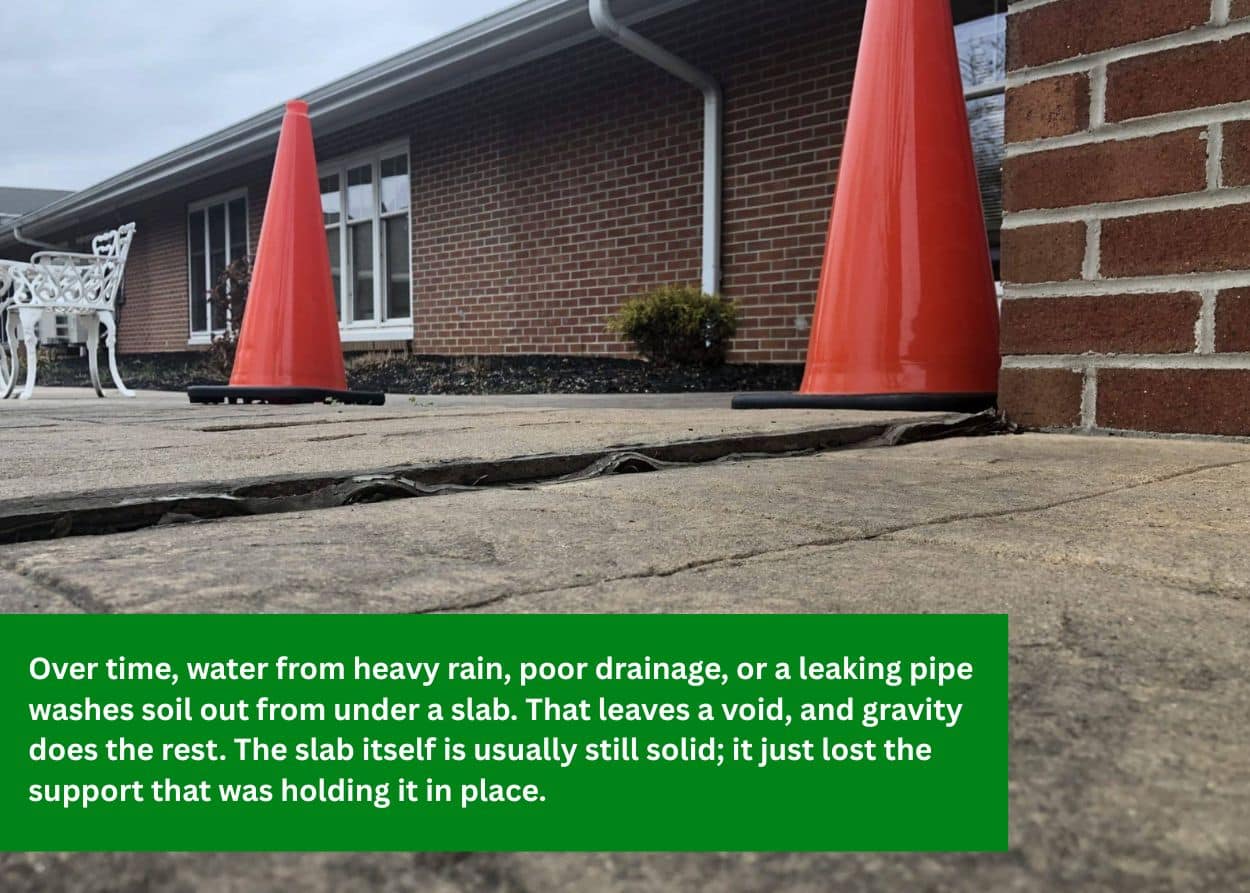
Over time, water from heavy rain, poor drainage, or a leaking pipe washes soil out from under a slab. That leaves a void, and gravity does the rest. The slab itself is usually still solid; it just lost the support that was holding it in place.
How the Polyurethane Foam Lift Works
This is where concrete lifting comes in.
- We drill a series of small holes, about the size of a dime, into the slab.
- Then we pump a two-part polyurethane foam through those holes and into the void underneath.
- The foam expands almost immediately, fills the empty space and gently raises the slab back to level.
- Once set, it forms a dense, water-resistant base. This base helps stop the same soil erosion from starting the cycle over again.
Here’s the part that surprises most homeowners: this process usually takes a few hours. The foam itself cures in about 15 to 30 minutes. There’s no jackhammer, no dumpster full of broken concrete, and no waiting days for a new pour to cure. Our Concrete Lifting 101 guide walks through this process in more detail if you want the full picture.
Replacement still has its place, and we’ll always point you there when it’s the right fit. But if the slab is in good shape, tearing it out just to fix a soil issue underneath is usually more mess, more waste, and more money than the problem calls for.
What Types of Concrete Can Be Lifted?
This is the question we hear most often, and the answer is: more than most people expect. If it’s a flat, poured concrete surface, there’s a good chance we can lift it.
Driveways
Lifting closes the gap that forms at the garage apron and evens out the trip line at each expansion joint.
Sidewalks
A settled sidewalk panel creates a real trip hazard. Lifting brings each panel back level with the ones beside it.
Patios
We re-level the surface around fixed features like a fire pit or retaining wall.
Pool Decks
Backfill around a pool wall settles naturally over time. Lifting restores a level deck without draining or damaging the pool.
Garage Floors
A sloped garage floor directs water toward the house instead of away from it. Lifting corrects the pitch.
Porches and Steps
Porches and steps settle differently than the yard because they sit against your home's foundation. Lifting realigns them so they meet the house cleanly again.
Warehouse Floors
Lifting restores a level surface that can handle racking, pallet jacks, and forklift traffic.
Commercial Walkways
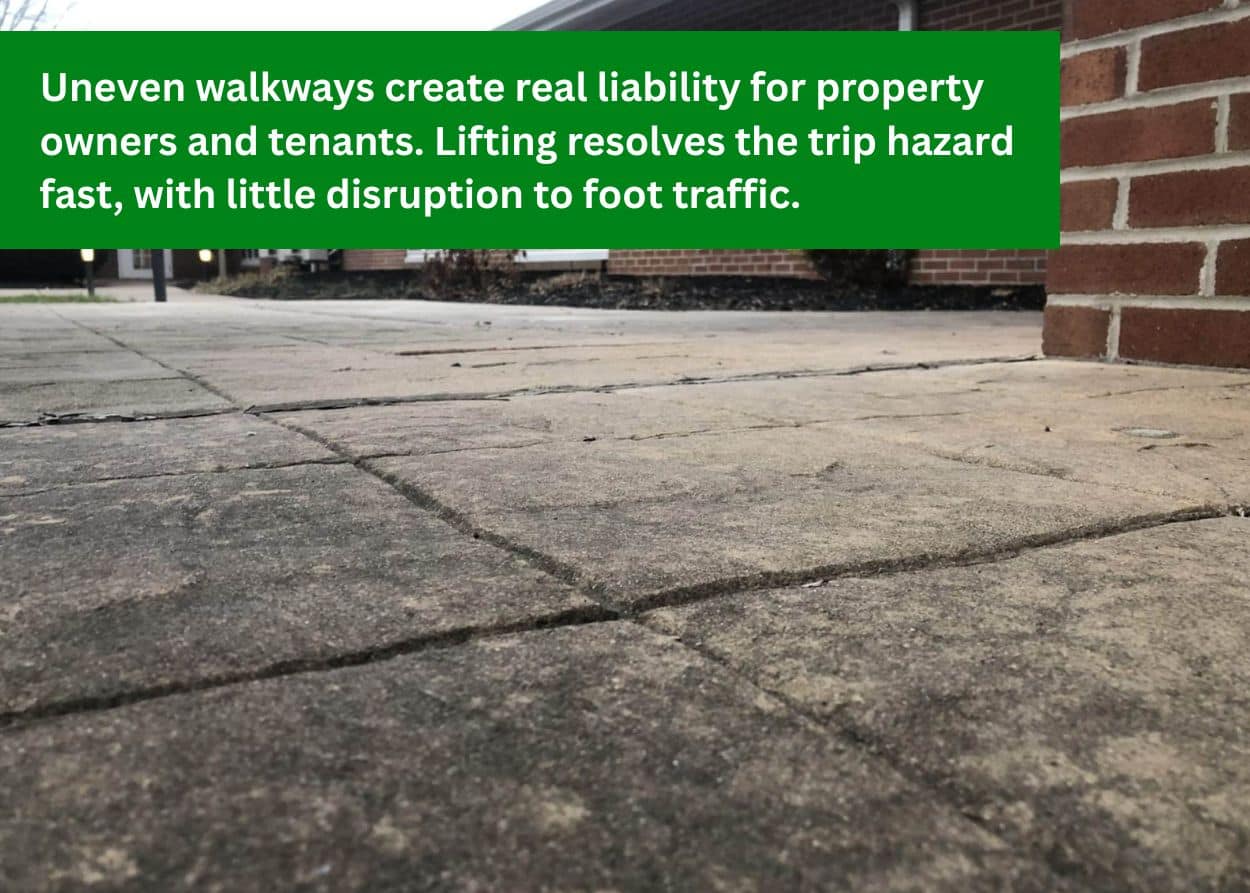
Uneven walkways create real liability for property owners and tenants. Lifting resolves the trip hazard fast, with little disruption to foot traffic.
If your concrete is sunk, tilted, or pulled away from a neighboring surface, it’s worth a look before you assume replacement is your only option.
5 Factors That Determine If Your Concrete Is a Good Candidate for Lifting
Not every sunken slab is a lifting candidate. Before we start the concrete lifting, here’s what we’re actually checking for.
Slab Condition
Is the concrete itself still solid, or is it crumbling and spalling at the surface? Lifting restores sound concrete. It doesn’t rebuild concrete that’s already breaking apart.
Cracking Patterns
Hairline cracks are common and usually not a dealbreaker. Wide cracks and cracks running in multiple directions indicate the problem is underneath.
Soil Settlement
A one-time event, such as backfill compacting after a pool install, is a great candidate. An active, ongoing settlement usually needs a soil fix first.
Drainage Issues
A downspout or bad grading forces water under your slab. This drainage problem needs to be addressed first. Even after a lift, that water will keep washing out the soil and create issues.
Structural Integrity
For a garage floor or a warehouse slab, the concrete has to support weight once it’s back at level. Depending on the scope, larger commercial or municipal jobs may need local approval before work starts. Our post on permit requirements for concrete leveling in PA covers what to check first.
Think of this as a quick gut check before making a hasty decision. If your slab is holding up well and just needs to come back to level, you’re probably in good shape.
When Concrete Lifting Isn’t the Right Call
We’d rather tell you the truth than sell you a service you don’t need. Here’s when replacement really is the better move.
Severely Cracked or Crumbling Concrete
Lifting won’t fix the problem if the slab is broken into pieces or crumbling. The slab can’t hold together under the pressure of the foam injection.
Active, Unresolved Soil Erosion
If the ground underneath is still eroding and the root cause hasn’t been fixed yet, the slab will likely sink again.
Concrete at the End of Its Service Life
Concrete typically wears out after 25 or more years of heavy exposure. At that point, replacement is the more lasting fix.
If any of this sounds like your situation, we’ll tell you during the free on-site consultation. For a deeper look at how to weigh these two options side by side, check out our guide on concrete repair versus replacement.
4 Benefits of Concrete Lifting
When a slab is a good candidate, the advantages over full replacement add up fast.
Cost Savings
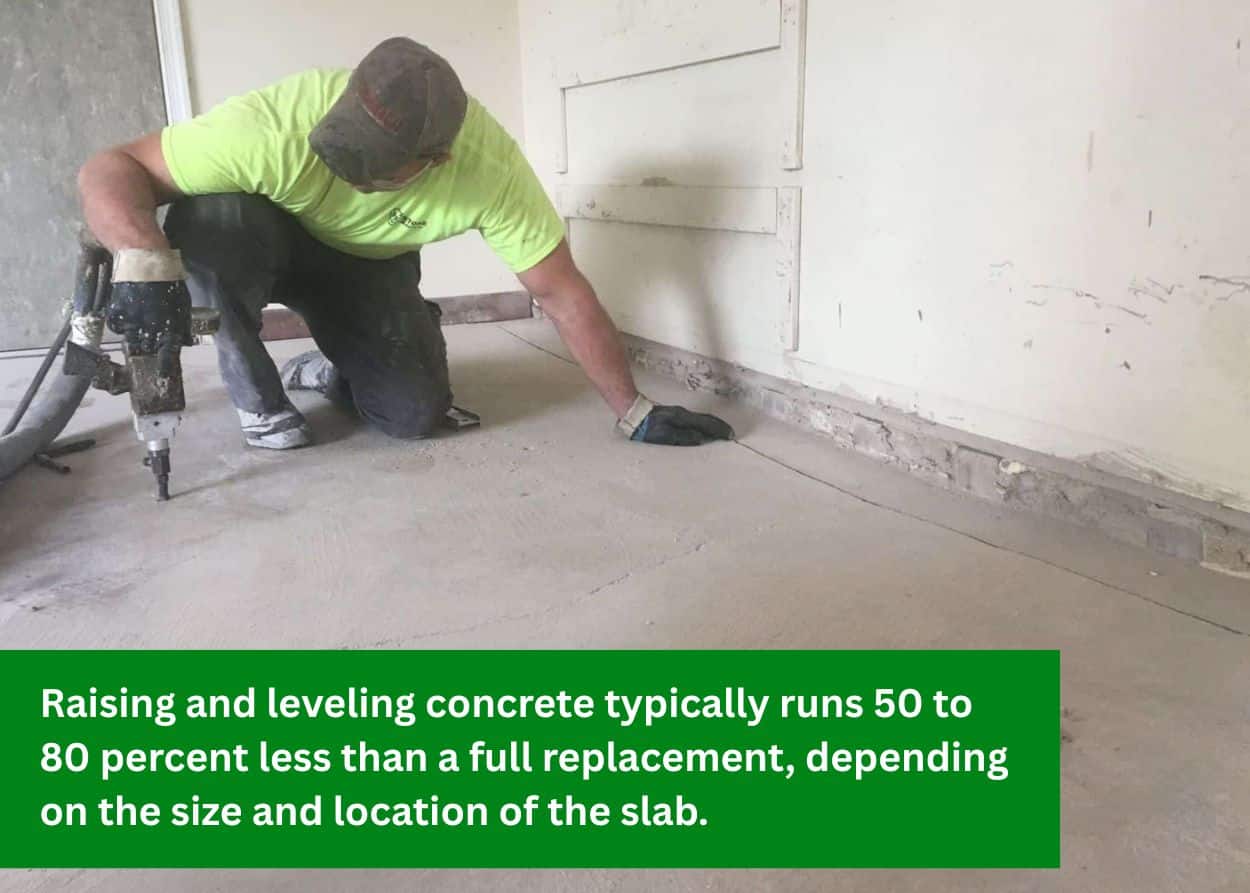
Raising and leveling concrete typically runs 50 to 80 percent less than a full replacement, depending on the size and location of the slab.
Faster Completion
Most lifting jobs wrap up in a matter of hours. Replacement means demo, forms, a new pour, and a multi-day cure before you can use the surface again.
Minimal Disruption
Concrete lifting saves you headaches.
- No jackhammering
- No dumpster of broken concrete sitting in your driveway
- No fenced-off work zone for days on end.
We saw this firsthand on a concrete lifting project at Landis Homes. A full tear-out would have meant disrupting residents at this senior living center far longer than necessary.
Extended Lifespan
Filling the void under the slab doesn’t just fix today’s problem. It gives the concrete a stable base that helps prevent that same spot from settling again.
Ready to Get Your Concrete Back to Level?
We understand why a settled slab is frustrating. It's not just an eyesore. It's a tripping hazard and a drainage headache. It’s the job you keep putting off because "replace the concrete" sounds expensive and disruptive. Concrete lifting solves that in one visit, without you having to tear anything out.
Keystone Gun-Krete has helped homeowners and property managers across South Central Pennsylvania fix this exact problem since the early 2000s. We hold the same standard we've kept since our company started in 1980: we provide you a straight answer and a fix that lasts. You can hear from your neighbors in our reviews from people we've helped across the region.
Here's how to get started: contact us for a free on-site consultation. We'll look at your slab and tell you honestly whether lifting or replacement is the right call. You can stop stepping around the problem and get your driveway, patio, or sidewalk back the way it should be.
