
How to Prepare Your Property for Concrete Pumping
Concrete day should feel calm. Organized. Predictable.
The reality? It only goes that way when the site is ready. But what if the job site isn't ready for the pump?
Instead of a smooth pour, you could face a series of costly disasters. A lack of clear access could mean the pump truck cannot reach the pour location, leading to delays and additional fees. Improperly prepared ground could cause the truck's outriggers to sink, creating a dangerous situation. Or, imagine the worst: a pipe gets clogged mid-pour because of debris, bringing the entire operation to a grinding halt. This can lead to wasted concrete, blown-out hoses, and a massive, messy cleanup.
At Keystone Gun-Krete, we’ve pumped across South-Central PA since 1980. Lancaster. Harrisburg. York. Reading. And beyond. We’ve seen what slows a job—and what keeps it moving. Let’s set you up for the second one.
In this guide, we’ll show homeowners, contractors, and property managers exactly how to prepare your property for concrete pumping—so you avoid delays, reduce costs, and get a clean, consistent pour. We’ll cover access, ground prep, utility protection, scheduling, and safety. Simple steps. Big payoff.










Not Enough Time to Read? Here's a TL;DR:
- Ensure clear access for boom pump trucks with 14 feet of height clearance and 10 feet of width to the set up location. Once we reach the set up location, ensure there is plenty of width for outrigger spread. Our scheduler can guide you on the size of box needed based on the pump you have on order. For Trailer Pumps, height, width, and soil conditions aren’t as critical although we still need to be able to pull up as close as possible to the pour on solid ground to limit the amount of hoses / pipes needed to reach the pour.
- Prepare a level, stable surface and protect landscaping, utilities, and fragile structures.
- Ensure there are no overhead obstructions or hazards like power lines or trees if you are renting a boom pump.
- Set up a contained washout area and coordinate timing and size of wash out area needed with the pumping crew.
- On pour day, maintain a safety buffer, ensure PPE is worn, and monitor weather conditions.
- Proper preparation will reduce delays, prevent damage, and ensure a smooth, consistent pour.
Before We Get Started: A Few Final Reminders
While the pumping crew takes care of the concrete pour, a little preparation on your end goes a long way. Use this checklist on the day of your project to ensure everything goes smoothly and safely.
Your Day-Of Concrete Pumping Checklist (Print This)
- Clear Access: Ensure 14 ft height clearance, 10+ ft width, and move all obstructions like cars and dumpsters.
- Ground is ready: Level and firm surface: no soft spots or snow/ice, mats staged if needed.
- Utilities are marked: Mark overhead lines and underground lines, and protect fragile surfaces. Also make the pump operator aware of any underground tanks or voids that could lead to compromised support for outriggers.
- Washout plan: Contained area for washout—away from drains and landscaping.
- Crew coordination: Confirm start time, sequencing, and backup plan for weather or delays.
- Safety zone: Barricades, power-line buffer, PPE, and spotters assigned.
Tape this to the garage door. You’ll thank yourself later.
Clear Access Paths for Pump Trucks & Hoses
Think of access like a runway. If it’s tight or blocked, nothing lands on time. Specifically, if the path is too narrow or low due to overhanging tree branches or power lines, the concrete pump truck itself may not be able to get in. Most sites require at least 10 feet of width and 14 feet of height clearance. Trim branches and move vehicles or dumpsters as needed. (See ACPA setup guidance.)
Keep in mind that loaded mixer trucks are heavy, often exceeding 80,000 pounds, and cannot pivot easily. Plan staging carefully to allow safe entry, discharge, and exit without risking damage.
Protect finished surfaces by using plywood or road mats over pavers or new asphalt. Mark sprinkler heads or other delicate areas near the hose route.
Whenever possible, keep the hose line as straight as possible to minimize bends, maintain consistent pressure, and achieve a cleaner pour. For placement options, see our Concrete Pumping & Line Pumping Services.

Pro tip: Take a 60-second phone video walking the access route the day before. Send it to the scheduler. They’ll spot red flags right away.
Ensure Stable, Level Ground for Equipment Setup
Outriggers carry enormous loads. Even ground that “looks fine” can fail—especially on backfill, near trenches, or after rain. Choose a level and stable setup pad to reduce tip-over risk and prevent uneven pours.
Check the bearing capacity of the ground—recently backfilled areas, utility trenches, and septic fields are not suitable—and use engineered outrigger pads or mats to distribute the weight.
During winter or wet conditions, remove snow, ice, or mud, and stage composite mats as needed. A simple rule of thumb: if your boot sinks into the ground, the outrigger likely will too.
Mark & Protect Landscaping, Utilities, and Fragile Structures
Safety first—above and below.
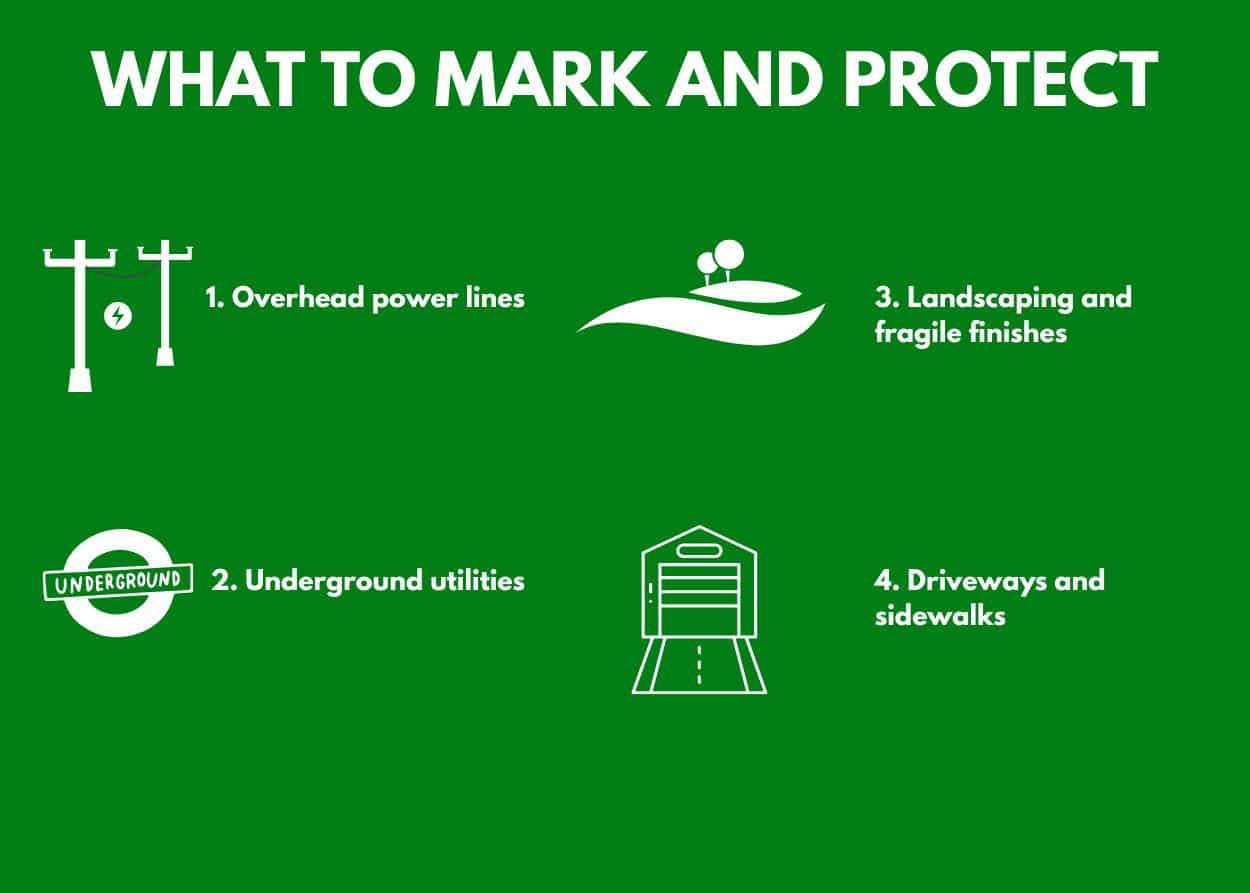
Overhead power lines: Maintain at least 20 feet of clearance between any part of the placing boom and energized lines (50 ft if voltage exceeds 350 kV). That’s the ACPA position. Treat it as a hard no-go zone.
Underground utilities: In Pennsylvania, contact 811 (PA One Call) at least three business days before excavation so underground lines can be marked. Even if you’re not “digging,” heavy equipment and outriggers can cause issues—so know what’s below. (PA One Call FAQ: timing and PA PUC 811 notice)
Landscaping & fragile finishes: Wrap tree trunks near hose routes to protect them. Set plywood over pavers, stamped concrete, and curb edges. Protect siding, windows, and doors along pump lines by covering them with plastic sheeting, plywood, or tarps. Cover outdoor A/C units and pool equipment near placement with tarps or heavy-duty plastic to protect from concrete splatter.
Driveways and sidewalks: Remember: mixers are heavy; avoid septic tanks, culvert ends, or unsupported edges. Stage the pump to reduce truck travel where possible.
Coordinate Timing & Logistics With the Pump Scheduler
Concrete is perishable. Timing is everything.
What to confirm the day before:
- Start time and sequence. Align the pump, finishers, and ready-mix arrival windows. If your mix contains admixtures or has temperature limits, share the details.
- Placement points and pour rate. Confirm hose locations, slab sections, walls/footings, and any pumping distances that require a different boom or line setup.
- Truck staging and washout. Identify a safe, accessible washout area and truck queue.
- Weather backup. High winds and lightning can pause boom operation. Heat and cold change set times. Build contingency plans.
For a deeper primer on how pumping affects logistics, check CIP 31: Ordering Ready Mixed Concrete (NRMCA).
Heads up: If anything changes—access, weather, scope—tell the scheduler and the pumping crew immediately.
Set Up a Clean, Compliant Washout Area
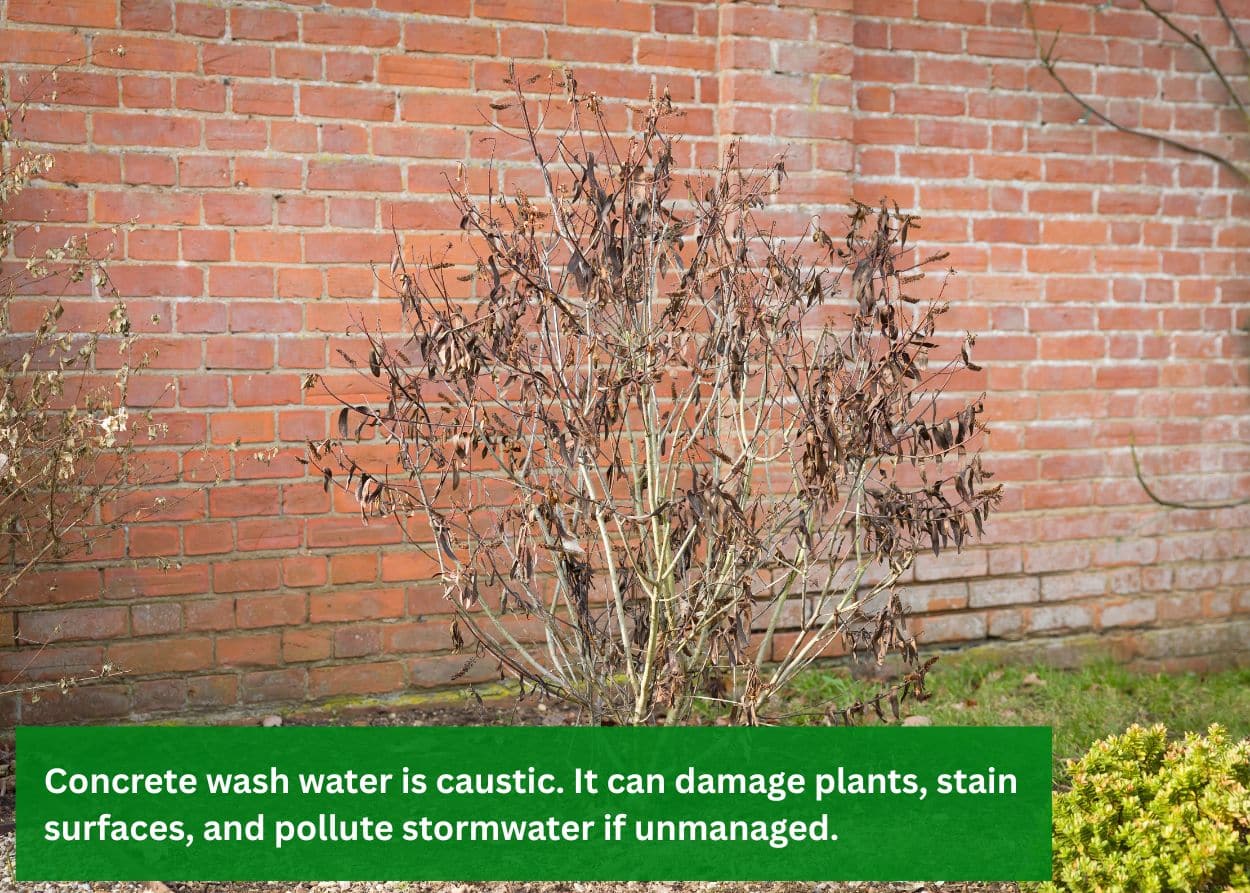
Concrete wash water is caustic. It can damage plants, stain surfaces, and pollute stormwater if unmanaged.
- Designate a washout zone. Use a lined, leak-proof container or a contained area away from drains and waterways.
- Post clear signage. Mark the spot so mixer and pump crews don’t guess.
- Follow stormwater BMPs. EPA’s updated guidance outlines practical ways to keep washout contained and out of drains.
After the pour: Let solids harden, then dispose of them responsibly. Never wash out into the street or storm drains.
Day-Of Safety Measures (Protect People & Property)
A safe site is a productive site. Small steps, big risk reduction.
Create a safety buffer around the hose: When starting to pump—or anytime air could be in the line—keep everyone back until the concrete is flowing smoothly. Hose whipping is real and dangerous. Use spotters and barricades.
Respect the power-line danger zone. Recheck your 20-ft clearance before unfolding the boom. If winds pick up or the setup shifts, stop immediately and reassess.
Control the work area by barricading swing zones and outrigger footprints, keeping kids, pets, and bystanders clear. Assign a single point of contact to communicate with the pump operator.
Wear appropriate PPE, including gloves, boots, and eye protection.
Keep the pump operator informed of any changes to mix, placement order, or hose routing.
Weather, Mix, and Placement Tips (So Your Finish Looks Great)
Weather and mix conditions play a critical role in a successful pour. Check the forecast carefully, as wind, lightning, and extreme temperatures can disrupt placement. Match your mix design to the method of placement, and communicate specifics like slump, aggregate size, and any admixtures with the crew. Minimize delays by staggering trucks to maintain consistent pressure and avoid cold joints. Finally, finish the concrete carefully—don’t overwork the surface, monitor bleed water, and consider shade, windbreaks, or curing compounds as needed to achieve the best possible finish.

Want a primer you can send to your team? Share The Essential Guide to Concrete Pumping.
Communicate Early. Over-Communicate on Pour Day.
Here’s a simple rhythm we recommend:
A week out
- Schedule your concrete pump. Confirm washout plan.
48 hours out
- Re-walk the access and setup area. Trim anything that’s grown or moved into the path. Share a site map with staging and hose routes.
Day before
- Confirm start time, truck spacing, mix details, and crew count with your pumper and ready-mix supplier.
- Clear streetside parking. Place “no-parking” cones if needed. Set barricades. Brief the team. Review power-line clearance (20-ft minimum).
Wrap-Up: Prep Right. Pour Once.
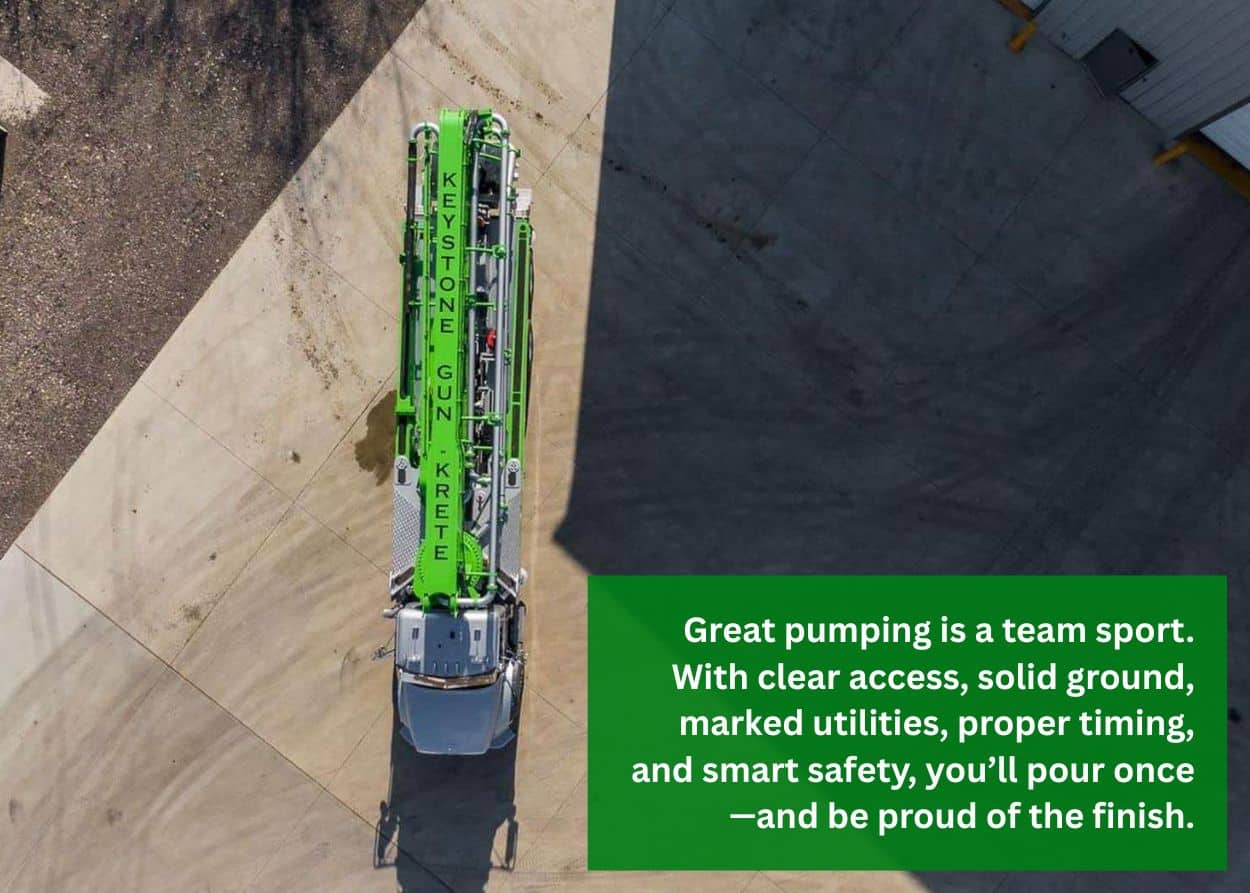
Great pumping is a team sport. With clear access, solid ground, marked utilities, proper timing, and smart safety, you’ll pour once—and be proud of the finish.
At Keystone Gun-Krete, we’re here to help you get your concrete projects done faster, safer, and with less work! We do much more than simply concrete pumping; read about concrete lifting and the required permits, or check out our full line of services on our website.
Ready for a smooth pour? Contact us now for a personalized quote for Concrete Pumping anywhere in our Service Areas.
